Aruba 2930M JL322A Switch Stack Replacement

This blog post is a step-by-step tutorial on replacing an Aruba 2930M JL322A 48 Port POE+ switch. This will cover the backup or configuration, pre-installation configuration (physical and logical), and physical installation of the switches into production.

  • Assumptions
    • You have unboxed all parts and have confirmed all are present.
    • You have knowledge of how VLANs work and know how to properly connect the new stack to your core switch/router for testing purposes (tagging the correct VLANs on the right ports).
  • Notes
    • Do not power on or plug in the switches until you have the stacking cables connected!
    • I use the traditional web GUI!
    • I have had issues with downloading the config using the download button on the web interface.
  • Parts rundown
    • 4x Aruba 2930M JL322A Switches
      • This includes power supplies and rackmount equipment.
    • 2x Aruba JL083A SFP+ expansion card
    • 1x Aruba SFP+ GBIC
    • 4x Stacking Cables
  • Getting the current config from the old switch stack
    • Log into your switch stack’s IP address.
    • Navigate to the “System” section and to the “Updates/Downloads” subsection.
    • Click the Download button to get the current configuration.
    • Since you are doing this on a new switch stack, you want to delete the stacking config from the text file you downloaded. After deleting all of this from the file, you have a perfect config to paste into the new switch stack.
    • DELETE ALL OF THIS
    • You can alternatively go into the “Troubleshooting > Configuration Report” section to see the config in plain text on the web interface. You can then copy it into a text file and do the same thing if you have issues downloading it.
  • Connecting Power Supply
    • Focus on the back of the switch, there will be two empty slots on the back. Remove the cover from one of the power supply slots (it doesn’t matter which) like the image shown below.
    • Once the cover is removed, you can insert the power supply such as in the image below.
  • Connecting Stacking Modules
    • Next to the power supply modules, there will be a port for the stacking module in the middle as shown in the image below. You need to remove the two screws circled in blue to take off the cover plate.
    • Once the cover plate is removed, you can insert the stacking module as shown in the photo below
  • Connecting SFP+ Expansion Card and Inserting GBIC
    • On the far right, there is one last empty slot. This is for the SFP+ expansion slot. You need to remove the cover plate much like the stacking module cover plate. Once it is removed, you can slide the expansion card into the slot. It takes a little more force than expected; push until you hear a light click. You can then screw the card, remove one of the coverings, and insert the GBIC (it doesn’t matter which port you use, I decided to use port 1). See the photo below for reference.
  • Plugging in the stacking cables
    • Once you have all modules installed, you can connect the stacking cables. There is a diagram shown below (A different switch but the same outcome). Put simply, connect port 1 to port 2 on the switch under it and repeat.
  • Powering on and connecting to console
    • Connect power to all switches. It will take 5 or so minutes to do the first-time boot process. You will know they are booted when there is a series of orange lights followed by a flash of green. After this is complete you can connect to the switch via the console port using a serial cable from another PC/Laptop.
    • Open PuTTY. You can then select the “Serial” option and connect to the switch.
    • Once here, you will log into the “manager” account and set a new password for first-time setup. You can then enter “show stack” to confirm all switches are connected and ready in the current stack.
  • Configuring switches
    • At this point, you are ready to configure the switch stack. You will basically just paste the backup text file you made during the “Getting the current config from the old switch stack” step.
      • If you want, you can change the configuration file to have different IP addresses for the VLANs. This will allow you to connect to the current stack and test connectivity before doing physical installation into the stack. For instance, you can change VLAN 1 to “192.168.5.3” instead of “10.66.5.2”. This will allow for testing without conflicting with the current switch stack.
    • Method 1 – CMD Only
      • Go into global configuration mode using the “conf t” command.
      • Copy the config file and paste it into the console you are connected to by right-clicking. You can do small sections at a time to scan for errors as you go if you wish.
      • WHEN YOU ARE DONE, DO A “write mem” COMMAND TO SAVE CHANGES.
    • Method 2 – Web GUI
      • Connect to the web interface (you can get your switch’s IP address using the “show ip” command).
      • Log in and navigate to the “System > Updates/Downloads” section.
      • Here you can download, upload, delete, and rename the config file. You will upload the file and update it.
  • Test Switch Configuration
    • After doing the config import, you can test various ports by plugging a PC into each port and seeing what IP address you get (this will test for connectivity and VLAN configuration). Ping outside addresses through the switch CMD, check the running config, check the stack status, etc).
  • Physically Swap the Switch Stack
    • This is pretty straightforward. Unplug everything from the old switches; do one switch at a time and keep track of which cords go to which port if you need to.
    • Unscrew from the rack and replace it with the new one.
    • Plug all ethernet cables into the new switch and eventually the stacking cables whenever all switches have been swapped out.
    • Give power to the new production stack.
    • Connect to the web GUI once the stack is up.
    • Change the IP addresses of the switch if you need/want to and be done!
  • Other Commands
    • To change VLAN IDs on multiple ports
      • conf t
      • vlan 1
        • Or whatever VLAN ID you want
      • tagged 1/1-1/48
        • This is to tag every port from port 1/1 to 1/48. This same command works for untagged as well.
      • write mem
    • To change the IP address of a VLAN interface
      • conf t
      • vlan 1
        • Or whatever VLAN ID you want
      • ip add 10.66.x.x 255.255.2xx.0
      • write mem
    • To remove an IP address from an interface
      • conf t
      • vlan 1
        • Or whatever VLAN ID you want
      • no ip add 10.66.x.x 255.255.2xx.0
      • write mem
    • To make an interface get an ip address from DHCP
      • conf t
      • vlan 1
        • Or whatever VLAN ID you want
      • ip addr dhcp-bootp
      • write mem
    • To disable ipv6 on all VLANS and OOBM
      • conf t
      • oobm
      • no ipv6 enable
      • no ipv6 address DHCP full
      • exit
      • vlan 1
        • Or whatever VLAN ID you want
      • no ipv6
      • no ipv6 address DHCP full
        • Rinse and repeat until you get through all VLANs.
    • To show all modules on a switch (stacking modules and SFP+ modules
      • show modules
    • Updating the firmware of the switch
      • Log into the web GUI
      • Go to the “System” tab and the “Updates/Downloads” subtab.
      • Under the “Software Image” section, click the “Update” button next to primary.
      • Choose the switch file you downloaded from Arubas website
      • Click the “Save” button and reboot the switch stack (they will all upgrade if they are stacked).
    • Get a list of ACL’s
      • show access-list
    • Showing details for the switch (System Name, System Contact, System Location, MAC Age Time, Time Zone, and the System Serial Number).
      • show system

Creating and Uptime Kuma Server Using Docker

This tutorial will cover creating an Uptime Kuma server using a Docker Container. Uptime Kuma is a monitoring software meant to create simplistic dashboards that track the uptime of websites, servers, or anything that can be pinged.

  • Assumptions
    • You have an Ubuntu 18.04/20.04/22.04 virtual/physical machine made.
    • The machine is up to date (apt-get update AND apt-get upgrade)
  • Install Docker
    • sudo apt-get install docker.io
    • You can check the installation by doing “sudo docker ps” and seeing if it outputs an error or not
  • Create an Uptime Kuma Docker volume
    • docker volume create uptime-kuma
  • Run the docker container
    • docker run -d –restart=always -p 3001:3001 -v uptime-kuma:/app/data –name uptime-kuma louislam/uptime-kuma:1
  • Connect to the interface and create a user account
    • The default web interface port is 3001 so you can navigate to the web GUI by entering IP_ADDRESS:3001 in your web browser.

Adding a NAS Drive to a Windows 2016 Server

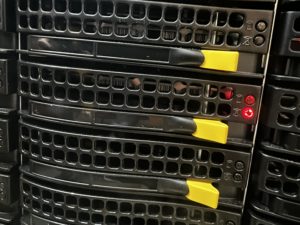
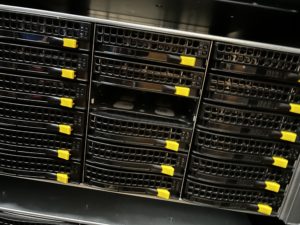
We recently acquired 3 IceBreaker 4936 servers from DoDCFL (for free) and were looking for the best use for these bad boys.  We landed on our CCTV setup.

They are all 36-thread servers with 256GB of RAM and 216TBs of HDDs.  While the storage isn’t blazing fast by today’s standards, it is great archival storage.

Our CCTV system is Milestone, which requires the storage drives to be local.  We decided to try and set up TrueNas on the Icebreaker to allow us to greatly enhance our storage longevity.  The RAID and TrueNAS install are covered in a separate post by my excellent Miami intern (Maverick Peck), that completed that part of the process.

After TrueNas was installed we had to first setup iSCSI on the NAS.  We tried other solutions but in the end, the only one that worked with Milestone was having the drive on the recording server connect with iSCSI Initiator.

Step 1 – On the server that is connecting to the NAS, install iSCSI Initiator.  By typing iSCSI in the start bar you will get the best match of iSCSI Initiator, simply click on it.  Click the Yes button to make it a service that starts automatically in the future.


Step 2 – Set up the iSCSI Share you will be using on TrueNAS.  This YouTube video capture covers the process of:

  • Setting up the Zvol storage pool
  • Configuring the iSCSI Block Share
  • Enabling the TrueNAS iSCSI Service
  • Connecting the NAS Volume to iSCSI Initiator on your server
  • Finally, setting up the new disk in Disk Management

Hopefully this helps anyone else looking to setup a NAS and getting drives mapped as local drives on their server.

Building a TrueNAS Server on an Icebreaker 4936 Server – WIP

This blog post is a tutorial for creating and configuring a TrueNAS server with a Broadcom SAS2108 Raid Controller using RAID 1+0 (RAID 10). There will be a Youtube video linked below showing the whole setup process from start to finish.

OS: TrueNAS

  • Assumptions
    • You have already completed the “Quick Start Guide” by connecting the raid controller components to each other inside of the case.
    • The hard drives have already been slotted into the hot swap bays.
    • The system is able to be powered on and is capable of entering BIOS.
    • You have created a TrueNAS bootable USB drive.
  • Connect a keyboard and monitor to the server(a mouse is not required).
  • Power on the machine to boot to the RAID controller.
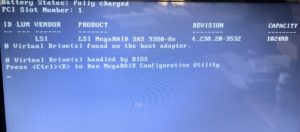
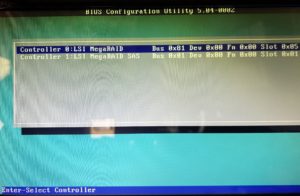
    • After the initialization screen and the HDD check screen, there will be a brief moment where you can press “ctrl + R” to boot to the RAID controller.
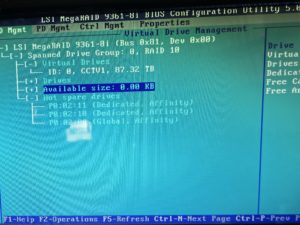
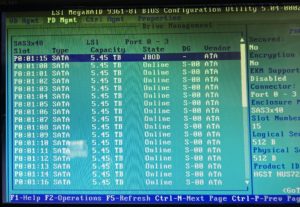
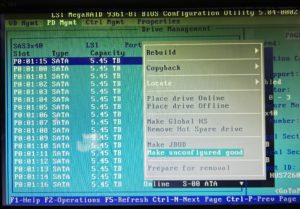
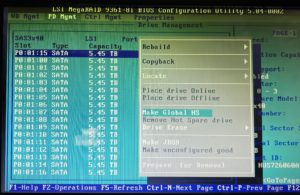
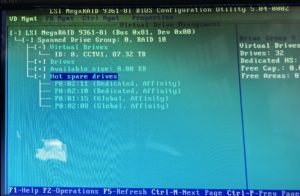
    • Once on the controller interface, you can select your RAID configuration. This includes the RAID level, which drives you want to use, setting up hot failover, and how many physical drives you want for each logical drive. In my case, I used RAID 10 with 18 drive logical drives (18 striped, 18 mirrored).
      • The RAID card included with this server supports RAID 0, 1, 5, 6, 10, and 50. For more information and visualizations of the different raid levels, visit the link HERE.
    • Once you are done with configuring your RAID setup, you can save and power off the machine.
  • Insert your TrueNAS USB stick into one of the free USB slots (I recommend USB 3.1 if possible).
    • Power on the machine and boot to BIOS (the key for this specific machine is “delete”.
    • Navigate to the boot section.
    • Set the first boot option to your TrueNAS USB drive
    • Save and reboot the machine
  • Go through the TrueNAS Installation
    • Once at the installation screen, you can press “1” to start the installation method.
    • After the initial initialize page, you can press “1” to select the “Install/Upgrade” option
    • You will then be prompted to select which drive you want TrueNAS to be installed on
    • You can then say yes to your data being wiped, enter a password, and to “Boot Via BIOS” you can choose UEFI if you want, I just chose BIOS since it is compatible with our legacy devices.
    • Say yes to creating a 16GB swap file if you have the storage for it.
    • Let the installation complete,
    •  remove the USB drive when prompted, and reboot the system. This is the last step before TrueNAS boots.
  • Enter the Web GUI
    • Once the machine has loaded the OS, you can then view the IP address in your web browser to get to the TrueNAS web GUI. The default username is “root” and the password is the one you set during the installation.

Cleaning Up BSOD NTFS Issue

Occasionally a Windows system will decide to bother us with a blue screen of death.  There are a few things we can do that may (and usually does) fix the issue.

  1.  Open Powershell as an administrator and run: sfc /scannow
    • This will search for bad windows files and replace them.
  2. Now run : DISM /Online /Cleanup-Image /RestoreHealth
    • This will really do the same but replace them from Microsoft services if the above command could not fix them.
  3. Lastly, run: chkdsk /r /f
    • This will do a checkdisk on your OS drive and attempt to repair the errors.  You technically could do this first, but I got the BSOD when I did it in that order, and fixed my issue when I did it in this order.
    • You will have to do a restart to allow the chkdsk to run on the OS drive.

Neo Forza 2TB MLC NVMe 1.4 PCIe SSD Review

I recently purchased this SSD for my gaming rig. This has been a really good and reliable SSD. The motherboard for this rig is the MSI Mag B50 Tomahawk. This is a 2TB M.2 PCIe SSD from the company Neo Forza. I got it because it has many qualities of a good SSD. As an example, this M.2 is about 2 cents per byte. This SSD is currently 134.99 on Newegg.  It’s currently rated 4.6 out of 5 eggs on Newegg

.

Many of the reviews have pointed out how it’s really fast but may not be as fast as advertised. There is also the fact that it’s MLC which means it’s cheaper and will last longer than a TLC or QLC.  It may not be as fast as an SLC but this is also very cost-efficient.  I think this SSD would be a good investment for your gaming system. It may be an upgrade to the current storage devices you use. Some of the reviews also talk about how you can use all 2TBs of this drive and it’s actually 2TBs. Here is a list with some of the specs of this SSD.

As you can see in the photo the MTBF is 2 million hours, That’s relatively 228 years now that’s a long time.  With a max sequential read of 7000MBps and a max sequential write of 6850MBps, this seems to be a pretty good drive. I would personally recommend this drive and I would suggest that you purchase this SSD for your gaming rig.


Note: This is part of a class project

https://www.msi.com/Motherboard/MAG-B650-TOMAHAWK-WIFI

https://www.newegg.com/neo-forza-2tb-nfp400/p/0D9-007T-00038?recaptcha=pass

Western Digital WD_BLACK SN770

The WD_BLACK SN770 is a M.2 hard drive, that was made by Western Digital Corporation. The Western Digital Corporation is a company that makes computer drives, data storage, and data center systems, and cloud storage services. Their Headquarters are in San Jose of California. So the WD_BLACK SN770 is a Solid State Drive meaning it can only last for so long, how long? It’s Mean Time Between Failure last for 1.75 million hours, meaning this would last 199.7716895 years.

Now for speed and other stats, it’s read speed is 5000MBps and write speed is 4000MBps. it’s gigabyte is 500 and PCle is a Gen4 16GT/s, and can be up to 4 lanes. The 4KB Random reading is 460,000 and it’s 4KB Random writing is 800,000. and getting a WD_BLACK SN770 also comes with 3-year warranty, but this SSD does not come with a buffer and does not specify if it’s a TLC, MLC, or even a QLC. But the price isn’t that bad for a Solid State Drive, using this SSD was pretty decent, it had plenty of room and lasted for quite a while. So if you want one the link is right here Newegg.com only for $39.99.

Note: This review is for a classroom project.

Samsung SSD M.2 Hard Drive PM981a NVMe

Recently, I got this hard drive and installed it into my motherboard. So far I have had no problems with it at all. The price of the Hard Drive is only $182.13 according to Newegg. If you really think about it, that is a great deal for 1 terabyte of storage. After I installed it into my motherboard, I noticed a change that was much better than the last SSD hard drive that I recently had installed in my motherboard.Specifications:

  • Size 2280 GB
  • transfer rate 2900 MB
  • MTBF 1.5 million
  • Compacity 1 TB
  • Warranty 5 year
  • Read speed 3500 MBps
  • Write speed 2900 MBps

NOTE THIS IS PART OF A CLASSROOM ASSIGNMENT

References: https://www.newegg.com/p/0D9-0009-00AH8?

SAMSUNG 870 EVO Series 2.5

I have had no problem with this Samsung SSD. It has worked with my motherboard and it’s only 64.99.  Which is a good deal for what you get it is 250 GB. This is also good for the price when I put this on my computer. It was cheaper and I’ve had it for a month now and I have no problems with it. And I can tell a big difference in it from the old traditional spinny drive I had I would strongly recommend this.

Specifications

  • size 250 GB
  • transfer rate 560 MB
  • MTBF 1.5 million
  • compacity 1 TB
  • warranty 5 year
  • read speed 560 MBps
  • write speed 530 MBps

NOTE THIS IS PART OF A CLASSROOM ASSIGNMENT 

REFERENCES https://www.newegg.com/?recaptcha=pass

My Review On The SAMSUNG 980 M.2 2280 1TB

My Review On The SAMSUNG 980 M.2 2280 1TB

Ok so, the 1TB SSD worked as intended at least. It did as told, not much wrong with it. So far, Samsung hasn’t been that bad of a company. Every time I’ve chose to go with it’s products, everything has ran rather smoothly. Rather solid SSD.

It was at the speed of spoke of and worked as told. I wasn’t surprised or shock by any outcome though, despite it working fine. Do I recommended using this SSD yourself? I’d say so, maybe it shouldn’t be your best choice, but it certainly won’t be your worst. It’s your choice to trust my word.

Here’s the perfomance.

And above this are the details.


Thanks for reading!


Note:  This review is part of a classroom project.